BENIN TRAVEL AFRICA ONLINE
Car Rental In Benin,
Excusions, tours in Benin
Business tourism in Cotonou.

VODUN DAYS 2027 CIRCUIT
Come and discover the Vodou religion on a 10-day tour, from January 3rd to 12th, 2027 , organized in southern Benin. During this tour, you will have the opportunity to immerse yourself in Beninese traditions and participate in the Ouidah Vodou Festival, also known as VODUN DAYS, which will be held from January 8th to 10th, 2027, in the historic city of Ouidah, the spiritual and cultural center of Vodou. This international event is part of the celebrations for National Vodou Day, observed annually on January 10th throughout Benin.
Voodoo circuit program for 2027
The dates of the Vodou tour can be adjusted to suit your needs; however, January 8th, 9th, and 10th, 2027 must be included in the tour dates. The program is subject to change due to technical, administrative, or weather-related reasons.

Step 1: The Hland Forest, a natural and community gem

Discover pristine nature by dugout canoe. A biosphere reserve nestled in the foothills of the Zou River, Hlan is home to rare and precious flora and fauna. Glide along the narrow waterways in absolute tranquility. The only sounds you hear are birdsong, the calls of other animals, and the gentle murmur of the water. Fifty-five plant species have been recorded here, including the kapok tree (Ceiba pentandra), the iroko tree (Milicia excelsa), the raffia palm (Raphia hookeri), and the tiger lotus (Nymphaea lotus). The forest shelters six primate species, including Geoffroy's colobus monkey, the red-bellied monkey, and the Senegal bushbaby. Bordered by the villages of Lokoli, Koussoukpa, and Dèmè, the forest is central to the lives of the local communities. The inhabitants practice raffia wine extraction, mat making, livestock farming, and small-scale trade.
In one of the branches of the river, the wreck of a French colonizers' boat has rested since 1892, after it had been watched and stormed by the Amazons.
Stage 2: The underground village of Agongointo during the reign of the Dakodonou kings in the 16th century

A visit to the underground village of Agongointo, located in Bohicon, is a fascinating experience blending history, archaeology, and local culture. This unique archaeological site, also known as Ahouando in the Fon language (meaning "war hole"), was discovered in 1998 during road construction. It comprises 52 underground shelters spread over 7 hectares, once used as strategic hiding places by warriors of the Kingdom of Danxomɛ (1600–1900). Each shelter is dug into the ground with a narrow entrance leading to a main chamber and secondary rooms.
Step 3: The history of Dahomey from 1625 to colonization

The visit, including the museum and the tropical fruit drying center, begins at Place Lèto, a place steeped in Benin's history. Located in front of King Houégbadja's palace, it provides a fitting setting for this architectural gem. King Houégbadja's palace is a remarkable building that testifies to the cultural richness and historical importance of the Kingdom of Abomey. This UNESCO World Heritage site is a must-see for anyone wanting to discover Benin's roots.
The visit continues with the discovery of the fortifications, which constitute a key element of the city's historical heritage. They bear witness to the military power and political organization of the Kingdom of Dahomey, which lasted from 1625 to 1900.
Abomey, the former capital of the Kingdom of Dahomey, is a city rich in history and traditions.
Its cultural influence is largely due to the talent of its artisans, whose know-how has been passed down from generation to generation. The bronze workers of Abomey were renowned for their mastery of bronze casting, weaving was an essential activity for the women of Abomey, applied wall hanging is a technique specific to the art of the Abomey court, the potters of Abomey made a wide variety of objects.
Visits to the royal palaces and discovery of traditional activities in Abomey
The influence of traditional music over the centuries in Abomey
The city of Abomey, the former capital of the Kingdom of Dahomey, is the heart of a warrior and spiritual civilization whose lifeblood is music. Instruments there are much more than mere objects: they are symbols of power, intermediaries with ancestors, and guardians of the kings' history.
In Abomey, the drum is king. The Zinli, the flagship instrument of royal music, is a terracotta jar whose opening is covered with a goat or antelope skin; The Gbon , a vertical drum carved from solid wood, often adorned with royal motifs; The Kle (armpit drum).
Metal holds a sacred place in the traditions of Abomey, linked to the god Gu (the god of iron). The Gogan (or Gangan) is a double metal gong. The Assèn is a portable wrought-iron altar, used for its sound during processions. Finally, there are rattles, a gourd encircled by a net of beads or snake/fish vertebrae, and the Kpédjigaï, small bells attached to the ankles or wrists of dancers.
Step 4: Vodou in Lokossa in the 18th century and its traditional rites

Lokossa is a city steeped in history, with roots dating back to the 18th century. Its name, which means "under the iroko" (a large sacred tree), testifies to its deep connection with nature and ancestral beliefs.
In the heart of Lokossa stands the iroko, a giant tree revered for centuries. This sacred tree, a symbol of strength and wisdom, is central to many beliefs and rituals. Locals come to make offerings and formulate wishes.
You will witness the spectacle of the Kokou deity. This spectacular and intense Voodoo ceremony is centered on the incarnation of the warrior god Kokou, one of the most feared figures in the West African pantheon. It blends dance, trance, rituals, and impressive physical performances.
You will discover local culture and traditions and visit the Lonki Loko convent, the origin of the town of Lokossa. At the end of the day, you will participate in an immersive pottery-making activity at the living museum in Sè.
Step 5: Voodoo deities around Lake Ahémé and traditional activities

Possotomé is much more than just a village by the water; situated on the shores of Lake Ahémé, this place offers a timeless escape where ancient culture meets bountiful nature. Around Possotomé and Lake Ahémé, Vodou is not simply a tourist attraction: it is the very foundation of society, a way of life and a means of community governance. Here, every tree, every stream, and every village square can be believed to house a deity.
The Thermal Springs: You can visit the natural hot springs that gush from the ground. Some have therapeutic properties, and you can even visit the bottling plant to see how this resource is managed.
The Kpétou Forest: A few kilometers away, this sacred forest is home to a colony of Mona monkeys (which you'll likely see if you're quiet). Local guides will also explain the uses of medicinal plants.
The Barter Market: Unique in its kind, this market still allows villagers to exchange agricultural products for fish, without using money. A fascinating glimpse into a community-based subsistence economy.
You will be able to discover the traditional production of gari (fine cassava semolina), palm oil (a smooth oil rich in vitamins), and Sodabi: "Beninese Whisky," a white spirit distilled from palm wine. It is a sacred (used for Vodou libations) and festive drink.
Step 6: Discovering ancestral traditions and the mangrove in Grand Popo



The kpödjiguen dance is the ritual and identity dance of the Xwla/Xwéda people of Grand-Popo.
You will witness the kpödjiguen dance, a traditional dance. It is considered a true cultural treasure and is often performed at festivals, ceremonies, and important events.
Kpödjiguen is characterized by a very fast and catchy rhythm, which invites dancers to energetic and synchronized movements. The dancers wear colorful traditional costumes adorned with feathers, beads, and other accessories. These outfits add a spectacular visual dimension to the dance. The movements of kpödjiguen are very expressive and varied. The dancers use their arms, legs, and entire bodies to create complex and harmonious figures.
Kpödjiguen is a group dance. The dancers stand side by side and perform the same movements, creating a feeling of unity and solidarity.
Discovering the mangrove and the traditional activities of its inhabitants
By dugout canoe with a guide, you will visit
Bird Island is located in the Bouche du Roy Transboundary Biosphere Reserve, in the Mono River delta. The island is known for its wide variety of birds, including pelicans, cormorants, herons, egrets, and flamingos. It is an important nesting site for many bird species and is also a popular destination for birdwatching.
Salt Island, also known as Owlihoué Island, is a small island located in the estuary of the Mono River, near Grand-Popo. It is known for its salt marshes, where salt has been harvested for centuries.
Oysters in Djondji: Djondji is a fishing village. A visit to the oyster farms in Djondji is a unique and enriching experience. You will learn all about the oyster farming and harvesting process, from selection to the sale of the finished product. You will also be able to taste fresh oysters and discover the different ways they are prepared and consumed in Benin.
The braiding of the mat in Gbèzoumey,
Gbèzoumey, a village located about 8 km from Grand-Popo, is renowned for its traditional crafts, particularly mat weaving. This ancestral practice, passed down through generations, is an integral part of the village's cultural identity. Gbèzoumey mats are made from natural plant fibers, such as raffia, dwarf palm, and rattan. The artisans, primarily women, use skillful and precise techniques to create mats of various shapes, sizes, and patterns.
The preparation of palm oil in Kpèkô,
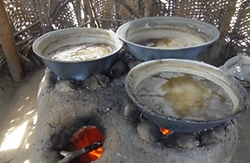
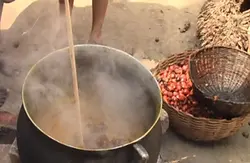
Kpèkô is a village renowned for its red palm oil production. This oil, essential in Beninese cuisine, is made from the fruit of the oil palm, according to a traditional process passed down from generation to generation.
The King's Mouth with typical fishing techniques.
The Bouche du Roy is an estuary located approximately 10 km from Grand-Popo. It is an important area for biodiversity, home to a wide variety of mangroves, lagoons, and islands. The Bouche du Roy is also known for its traditional fishing techniques, which have been passed down through generations.
Discover how coconut caramel is made in Grand-Popo
Coconut caramel is a popular traditional confectionery in Grand-Popo. Made from coconut milk, sugar, and grated coconut, this sweet treat is a delight for the taste buds and a perfect souvenir of your visit to Grand-Popo.
Vodou villages : places of worship and life
The Vodou villages of Grand-Popo are veritable sanctuaries where the faithful come to pray and pay homage to the deities. These places are often surrounded by lush vegetation and a peaceful atmosphere.
Discover the convents : places of initiation and community life. Convents are living spaces where Voodoo practitioners reside. They are often organized around
of a fetish and a voodoo priest. Initiates learn the rites, songs and dances specific to their tradition.
The turtle hatchery : On the coasts of Benin, sea turtles (mainly olive ridley, but also sometimes green or leatherback) come to lay their eggs on the sand. Eco-guards and volunteers (often through the NGO Nature Tropicale) patrol at night to collect the eggs and place them safely in the hatchery enclosure. After approximately 50 to 60 days of incubation under the protected sand, the hatchlings emerge and are immediately released into the ocean.
Stage 7 Ouidah, the Vodou festival (accompanied by a guide specializing in the ceremonies)


The sacred fire ceremony in Ouidah
On the evening of January 8, 2027, you will participate in the sacred fire ceremony, one of the fundamental rituals of Voodoo, particularly in Benin. It plays a crucial role in communicating with spirits, purifying and protecting communities.
Fire holds a central place in Voodoo beliefs. It is considered a purifying element, capable of repelling negative energies and facilitating communication with the spirit world. The sacred fire is often lit during important ceremonies, such as Voodoo festivals, initiations, or funerals.
The Temple of Pythons in Ouidah,
The Temple of Pythons is one of the most sacred and iconic sanctuaries of Voodoo.
Located in the heart of the historic city, opposite the Catholic basilica (a striking contrast that symbolizes the country's religious tolerance), this place is steeped in myths, history and deep spirituality.
The temple's origins date back to the 18th century, during the wars of conquest. According to local legend, the king of the kingdom of Houéda (present-day Ouidah) took refuge in the forest to escape warriors from the rival kingdom of Dahomey who wanted to kill him. Cornered, royal pythons emerged from the forest to protect him and repelled the attackers.
In Vodou theology, the animal is not venerated as a mere beast, but as the physical manifestation of a deity called Dan (or Dangbé). The royal python embodies very powerful metaphysical concepts. In the Vodou tradition of Ouidah, the python is a purely benevolent force. It is a guardian, a protector of the family and the city. Touching it (as many visitors and initiates do) is considered an act of blessing and purification.
Visit to the sacred Voodoo sites of Ouidah, a true spiritual and historical immersion (program from January 9, 2027)
The Sacred Forest of Kpassè (Zounmè), located at the entrance to the city, is the mystical heart of Ouidah. It is here that King Kpassè, founder of the city in the 14th century, is said to have mysteriously disappeared, transforming into an iroko tree to escape his enemies. Visitors can stroll beneath centuries-old trees, amidst imposing statues representing the various deities of the Vodou pantheon: Legba (the guardian of the gates), Heviosso (the god of thunder), and Mami Wata (the goddess of water).
The Slave Route : This 4-kilometer path, linking the former slave market to the beach, is marked by ritual stations. For captives, it was the path of no return; in Voodoo spirituality, it is the place where souls were entrusted to sea deities.
The Tree of Forgetting : slaves had to walk around this tree (9 times for men, 7 times for women) in order to forget their identity, their past and their earthly ties, and thus not die of grief during the crossing.
Zomaï's Hut: a place of total darkness where slaves were crammed together for weeks to accustom them to the holds of ships. Spiritually, it was a terrifying ordeal, a severing of ties with their ancestors.
The Tree of Return: around this tree, captives performed a final ritual to ensure that, even if their bodies died in foreign lands, their spirits (their Djoto) would return after death to the land of their ancestors in Africa.
The Door of No Return : this majestic monument, facing the Atlantic Ocean, marks the end of the journey. Here, altars are erected in honor of the souls of the deceased and those who perished at sea.
Visits to voodoo convents and appearances of masked deities:
The Dance of the Zangbéto : The Guardians of the Night in Benin
The Zangbéto are an emblematic figure of Beninese culture, closely linked to ancestral spiritual practices. Their dance, as mystical as it is spectacular, is a central element of many rituals and celebrations. The Zangbéto are believed to protect the community from evil forces and danger . They also play a role in maintaining social order. The dance is a way to communicate with the spirit world and invoke ancestral forces.
The Dance of the Voodoo Ghosts : An immersion into the heart of Beninese traditions
The Voodoo ghost dance is a practice deeply rooted in Beninese culture, linked to the belief in life after death and the role of ancestors in society . These dances, often spectacular and rich in symbolism, play a vital role in the religious and social life of communities. In the Voodoo religion, spirits, often called egunguns, are the spirits of ancestors who return to the world of the living during specific ceremonies. They are considered protectors of the family and community, as well as messengers between the living and the dead. The dance allows for direct contact with the spirits of the ancestors, offering them guidance and homage. It is believed that the dance can help heal illnesses and ailments, both physical and spiritual. Dancers in a trance can receive messages from the ancestors, predicting the future or revealing important information. The dance is also a way to purify the environment and drive away evil spirits. The dancers wear masks and costumes, often brightly colored and adorned with religious symbols, representing various spirits. The dancers enter a trance-like state, allowing the spirits to possess and communicate with them. The dances are accompanied by specific rhythms produced by drums and other traditional instruments. The dancers perform sacred movements, often repetitive and synchronized, which induce this trance-like state.
Stage 8: Porto Novo, capital of Benin, Afro-Brazilian cultural fusion and voodoo, and traditional crafts in Adjarra

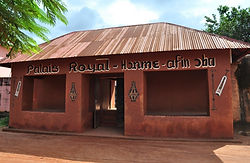

One city, three historical identities: Porto-Novo = Hogbonou = Adjatchè
Porto-Novo offers you an authentic immersion in Beninese history, culture, and life. You will have the opportunity to meet the King of Porto-Novo; it's a unique and deeply symbolic cultural experience.
The king of Porto-Novo holds the title of Ahosu . Since February 2024, the throne has been occupied by His Majesty Alomawlé Kpodagba Lokpon XIII, sovereign of the Kingdom of Tè-Agbanlin. He embodies the continuity of the royal traditions of the Goun people, despite the essentially ceremonial role of the throne today.
On this occasion, you will witness the Rhythm of Royalty: the Adjogan, a true symbol of prestige and solemnity. The rhythm is dictated by the Alounloun, a metal cane topped with rings that clink together. It is the distinctive sound of the court. The movements are imbued with dignity. The Adjogan is not danced hastily; each step and each arm movement recalls the grandeur of the ancient kings of Xogbonou (the traditional name for Porto-Novo).
You will have the opportunity to visit during your day trip
Honmè Museum (Royal Palace) : Immerse yourself in the history of the kings of Porto-Novo with royal objects and captivating stories.
The Alexandre Sénou Adandé Ethnographic Museum : Discover Beninese traditions through masks, sculptures and musical instruments.
The Da Silva Museum : another major museum that traces local and Afro-Brazilian history.
The Great Mosque of Porto-Novo : an Afro-Brazilian masterpiece of the 19th century, blending African and Oriental influences.
The Cathedral of Our Lady of the Immaculate Conception : A lively church with a choir and a warm local atmosphere.
Adjarra “City of Drums”
Adjarra is one of the best places in Benin to discover a vibrant, authentic craft deeply rooted in the traditions of southern Benin. There is a unique craft market, workshops for basketry, macrame, and weaving.
The making of tam-tams is one of the most emblematic artisanal skills: an entirely manual job, carried out by master craftsmen who sculpt, tan and assemble the instruments according to techniques passed down through generations.
Stage 9: The Green Venice of Africa - Ganvié and Lake Nokoué


Sunrise over Lake Nokoué and a visit to the Ganvié floating market are unforgettable experiences.
Lake Nokoué is located in southern Benin, near the equator. Sunrise over the lake is an unforgettable spectacle, occurring year-round around 6:45 a.m., with little seasonal variation. As the sun rises, the sky is adorned with spectacular colors, ranging from pink and orange to purple and blue. The lake's calm waters reflect the sky, creating a striking mirror effect. It's a moment of peace and tranquility, perfect for relaxing and enjoying the beauty of nature.
The Ganvié floating market is a lively and colorful place where fishermen sell their fresh produce, such as fish, fruits, and vegetables. You can also find souvenirs, clothing, and other handicrafts. It's a unique experience.
Discover the traditional activities of Lake Nokoué
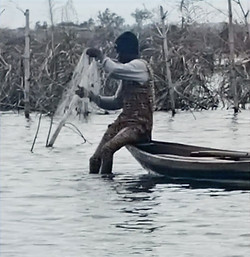
A visit to the fishing villages on Lake Nokoué offers a unique opportunity to discover the daily life of these communities and immerse yourself in their rich and vibrant culture. From your hotel in Ganvié, you will visit the various fishing villages of Lake Nokoué: Sô Ava, Vekky, Houédo Gbadji, Houé Aguéko, Sô Zounko, Sô Tchanhoué, and Ganvié. You will discover the fishermen's activities, be introduced to net casting, observe the fish weir techniques (acadja), and learn about the trade of the women who buy fish.
The Atchi dance, a welcoming dance ("welcome to the water")
You will witness the Atchì dance, a traditional aquatic dance characteristic of the people living on or around Lake Nokoué. It takes its name from the word "Atchì," which means water or river in some local languages. It is a collective and festive dance, often performed in the water or on floating platforms, accompanied by songs, drums, calabashes, and sometimes percussion played on the water itself.
Presenting the Atchì dance on Lake Nokoué evokes a unique cultural encounter between the traditions of the land (the Adja-Tado plateau) and the aquatic world of the Toffinou people (Ganvié, Sô-Ava).
Stage 10 Cotonou, a city where ancient traditions and modernity blend



The markets of Cotonou: from tradition to modernity
The Dantokpa market It remains one of Cotonou's most iconic places. Despite urban transformations and the gradual transfer of some activities to the new Tokpa Yôyô market, Dantokpa retains a unique cultural intensity. It is a space where visitors discover Beninese life in all its richness: the vibrant colors of the stalls, the aromas of spices, the voices of the merchants, the lively alleyways, and the vibrant energy of a large West African market.
The fetish zone is one of the most fascinating parts of the site. Here, ritual objects, medicinal plants, and Vodun symbols bear witness to a deeply rooted spiritual heritage. Food stalls, secondhand clothing shops, sewing workshops, and small artisans complete this immersive experience, offering an authentic glimpse into local skills and the daily lives of the inhabitants. It is a vibrant, sensory, and profoundly human place that reveals the soul of Cotonou and Benin.
Since its recent reconstruction, the Ganhi market has become one of Cotonou's most pleasant and modern markets. It combines the authenticity of a West African market with the comfort of a new and well-organized infrastructure. There, you'll discover fresh produce and the flavors of Benin. It's the perfect place to learn about Beninese cuisine.
The new Tokpa Yôyô market, located on the esplanade of the General Mathieu Kérékou Stadium, Tokpa Yôyô represents the new showcase of Beninese commerce. It offers visitors a clean, organized, and pleasant space comprised of 1,012 retail stalls, 415 modern shops, and 81 restaurants (including maquis and fast-food outlets) open to the outside. Tokpa Yôyô is the ideal place to discover Benin at a relaxed pace, buy souvenirs, sample local specialties, and enjoy a vibrant market. It's an essential stop to understand Cotonou's evolution between tradition and modernity.
Cotonou, the history and culture of Benin
Cotonou, the vibrant economic capital of Benin, is brimming with places steeped in history and culture. As you stroll through its streets, you'll discover lively squares, iconic monuments, and historic buildings that bear witness to the city's rich past.
The Amazon Esplanade pays homage to the Agoodjié, the famous female warriors of the Kingdom of Dahomey. It symbolizes the courage and pride of Beninese women.
Red Star Square, built during the revolutionary era (the Marxist-Leninist period of Mathieu Kérékou), represents a five-pointed star. In the center, a tower surmounted by a man carrying a rifle and a tool.
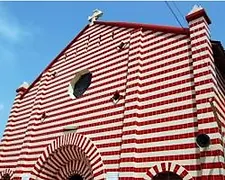
Notre-Dame Cathedral, with its unusual red and white striped facades, near the old bridge
The Mural Wall , located on the port wall (Marina Boulevard), is one of the longest graffiti walls in the world, retracing the history of the country.
The Zinsou Foundation : to discover contemporary African art. The ideal gateway to understanding the contemporary culture of Benin.
A visit to the craft village will reveal the rich creativity of Benin. You can purchase souvenirs, ebony or teak wood statues depicting scenes of daily life or royal symbols (busts of the kings of Abomey), and lost-wax bronze castings: a specialty inherited from the kingdoms of Nikki and Abomey. These are unique pieces representing warriors, animals, or thrones. You'll also find woven fabrics (Bazin and Kanvô): this is where you'll find the famous Kanvô (the handwoven loincloth), once reserved for kings. And don't miss leather goods: Toucountouna leather sandals, bags and belts crafted with meticulous finishing, and hand-dyed batiks depicting landscapes or abstract motifs.
Circuit organization conditions
3
Tours and excursions
At each stage, visits and activities are organized by local guides under the following conditions:
Abomey: guide, pirogue rental, entrance fees to sites, activity fees, lunch
Lokossa: guide, entrance fees, activity costs,
Grand Popo: guide, canoe rental, entrance fees
Ouidah: guide, entrance fee, ceremony fees
Porto Novo: guide, entrance fees, audience with the king at the royal palace, lunch
Ganvié/Cotonou: guide pirogue rental, activity fees, lunch.